
Australian Native Plants
Australia’s native flora is astonishing in its diversity - from delicate groundcovers to bold flowering shrubs, each species reveals a unique response to place, light, and climate. Beyond the well-known banksias and eucalypts, countless plants tell quieter stories of adaptation and beauty: curved seed pods, intricate blossoms, and leaves shaped by wind and sand.
This collection brings together a selection of native species that have captured my attention in the wild and in botanical gardens across Australia. Each photograph reflects a moment of stillness and admiration - a study of texture, colour, and the understated elegance that defines Australia’s living landscape.

Verticordia huegelii (Variegated Featherflower) A delicate Western Australian native, Verticordia huegelii is admired for its soft, feathery petals that shift in colour from white to deep maroon. This gradual change guides pollinators toward the younger, nectar-rich blooms - a subtle and elegant adaptation. The species’ fine texture and luminous hues capture the ethereal beauty of Australia’s southwest flora.

Grevillea petrophiloides (Pink Pokers) Native to Western Australia, Grevillea petrophiloides is known for its striking cylindrical flower spikes that can reach up to 8 cm in length. The vivid pink blooms, dusted with white tips, appear through winter and spring, attracting nectar-feeding birds and insects. Photographed in June 2021, this species embodies the bold colour and sculptural beauty characteristic of Australia’s proteaceous flora.
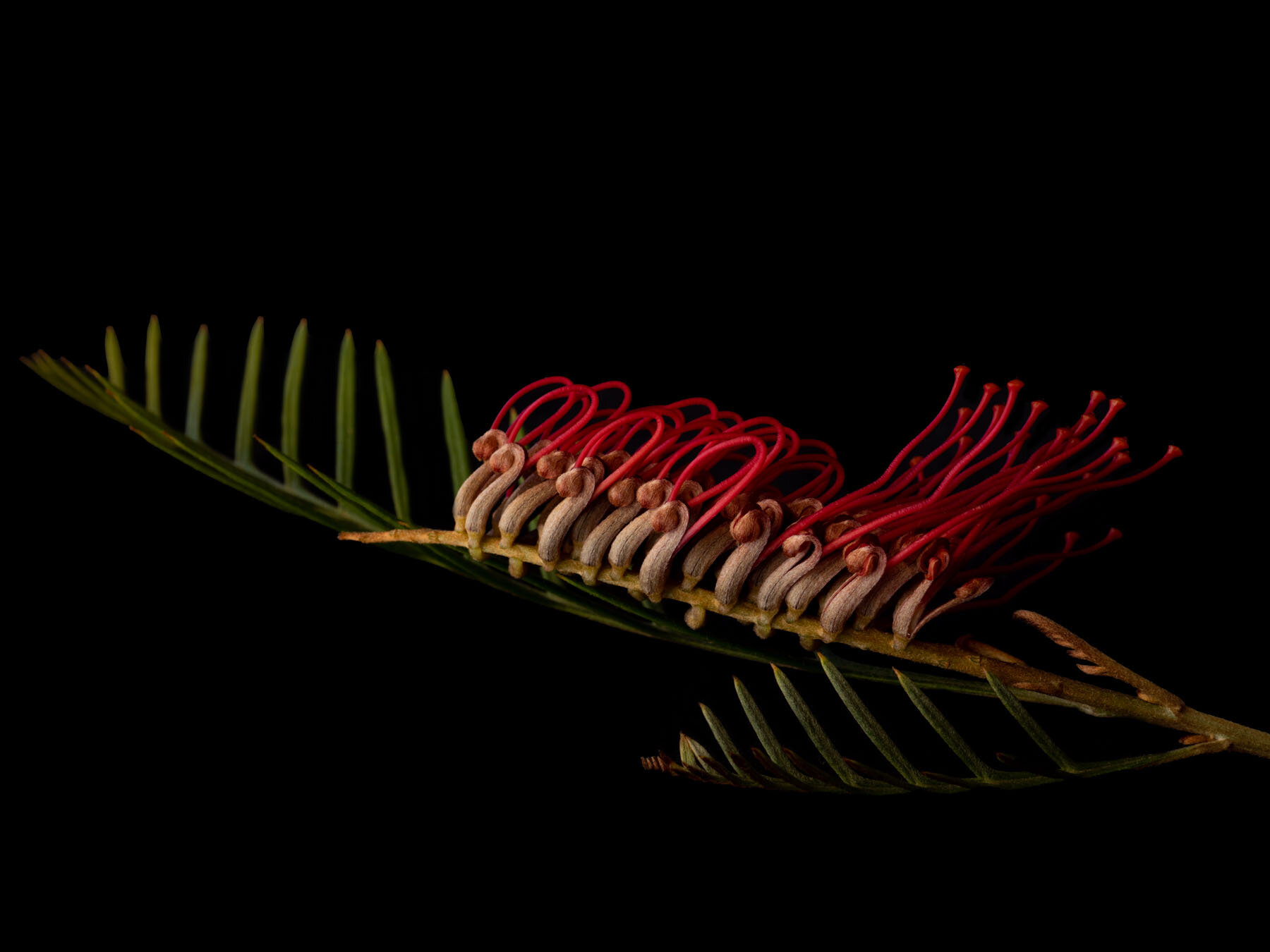
Grevillea sp. - “Vikings” A still life study of a Grevillea bloom from my garden, photographed against a black background. The curved, crimson styles resemble a row of poised helmets, inspiring the title “Vikings.” Grevilleas are iconic Australian natives, celebrated for their intricate, sculptural flowers that attract birds and embody the strength and rhythm of the bush.

Grevillea sp. - “Numbat” A still life of a Grevillea flower from my garden, titled “Numbat” for its resemblance in shape to the small, alert Australian marsupial. The curved bloom, with its layered structure and earthy tones, mirrors the creature’s poise and energy. Grevilleas, with their intricate forms, continue to inspire - each one a quiet reflection of Australia’s native life.

Dampiera altissima (Tall Dampiera) A delicate wildflower native to Western Australia, Dampiera altissima bears tiny, vivid blue-purple blooms that brighten the dry landscapes of the southwest. This macro photograph, taken in July 2021, captures the fine texture of its petals glistening with morning dew - a fleeting moment of colour and light within the quiet resilience of the Australian bush.

Grevillea intricata Endemic to Western Australia’s coastal shrublands, Grevillea intricata is a dense, tangled species named for its intricate branching habit. Its slender white flower clusters, shown here in bloom, attract a range of native pollinators. This image highlights the plant’s delicate structure and quiet complexity - a subtle beauty often overlooked in the rugged coastal landscape.

Hakea laurina (Pincushion Hakea, bud) Native to the south coast of Western Australia, Hakea laurina is best known for its spherical “pincushion” flowers, but even its buds hold quiet beauty. This photograph captures the unopened form nestled among slender leaves, the soft light revealing its striped surface and sculptural symmetry - a moment of calm before the vivid bloom unfolds.

Hakea petiolaris (Sea Urchin Hakea) Endemic to Western Australia, Hakea petiolaris is named for its distinctive spherical flower heads that resemble sea urchins. Each bloom combines pale cream and deep purple tones, creating a striking contrast against the plant’s grey-green foliage. This photograph captures the intricate symmetry and texture that make the Sea Urchin Hakea one of the most visually captivating members of the genus.

Hakea rhombales A Western Australian native, Hakea rhombales is noted for its distinctive curled buds and twisted seed pods that develop into striking sculptural forms. This photograph captures a single bud in its early, coiled stage - a moment of organic geometry that reflects the plant’s remarkable adaptation and the quiet artistry of Australia’s native flora.

Hypocalymma elongatum Endemic to the south-west of Western Australia, Hypocalymma elongatum is a graceful shrub belonging to the myrtle family. Its soft pink blooms emerge along slender stems, each flower delicately poised with golden-tipped stamens. This photograph captures the fleeting charm of the species - a quiet celebration of colour, light, and the subtle elegance of Australia’s native wildflowers.